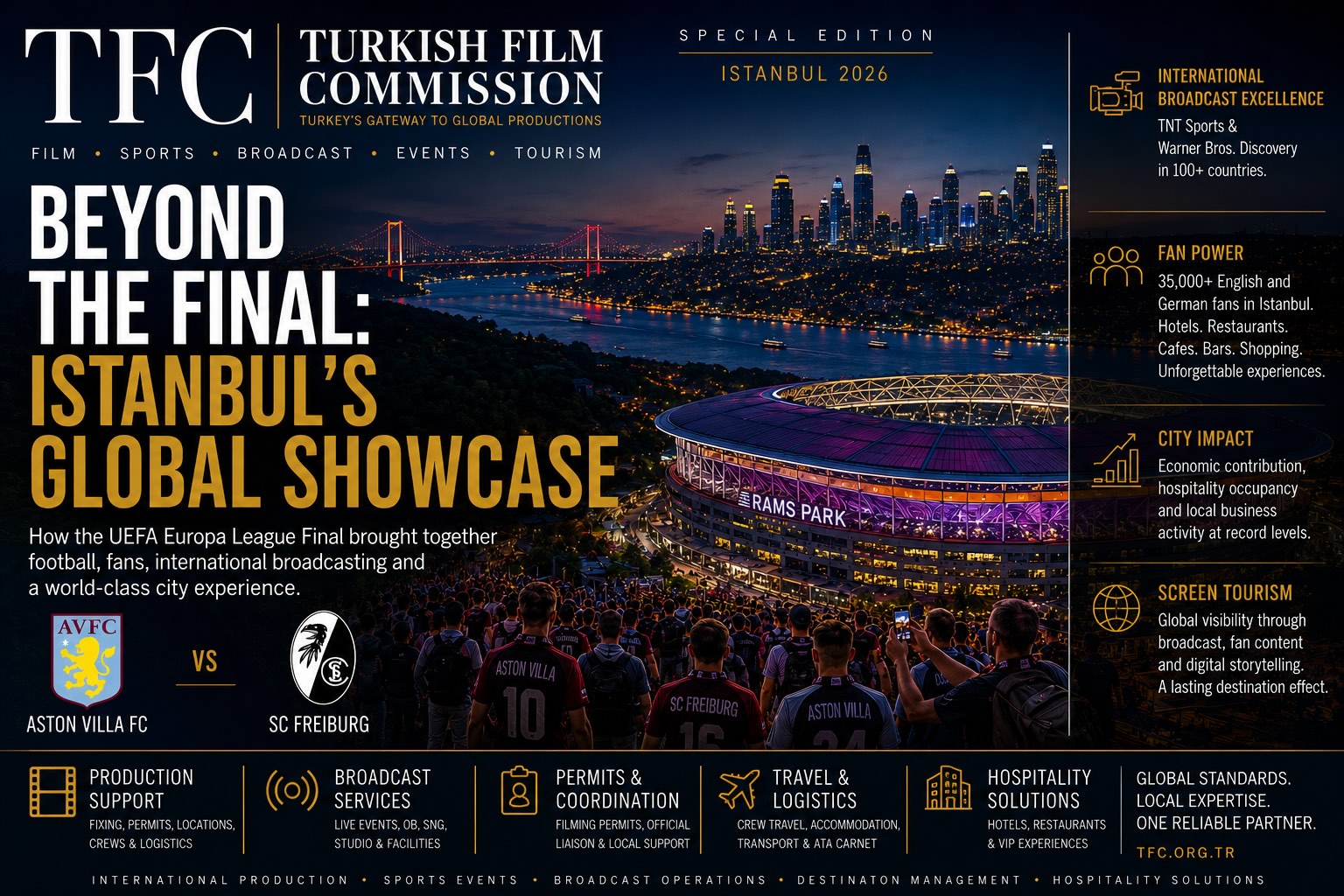
Modern sports events are no longer defined solely by what happens on the pitch. Today, major football finals have evolved into global media moments that simultaneously influence international broadcasting, city economies, hospitality industries, fan mobility, digital visibility and destination branding.
The UEFA Europa League Final week in Istanbul was a strong example of this transformation.
As Aston Villa FC and SC Freiburg supporters arrived in Istanbul in significant numbers, the city experienced not only the excitement of a major European final, but also the economic and cultural impact that accompanies large-scale international sporting events.
Hotels operated at high occupancy levels. Restaurants, cafés, bars and entertainment venues across the city welcomed thousands of international visitors. Beyond the stadium itself, Istanbul became part of the overall event experience.
Yet the impact of the final extended far beyond physical attendance.
Through TNT Sports, Warner Bros. Discovery Sports and UEFA-related international broadcast operations, Istanbul’s images reached millions of viewers around the world. Stadium atmospheres, city skylines, Bosphorus views, fan culture, public squares and social media content all contributed to the city’s global visibility.
Today, the concept of “screen tourism” is no longer shaped only by films and television series. Major sports events have also become powerful international media platforms capable of influencing how global audiences perceive destinations.
Fan-generated social media content, live broadcasts, Instagram Reels, YouTube vlogs and international broadcaster coverage during a UEFA final week can create an organic level of destination exposure that traditional advertising campaigns often struggle to achieve.
For cities such as Istanbul — with its unique geography, layered history and strong visual identity — these events represent far more than football matches. They become opportunities for international positioning and long-term destination value creation.
This also highlights the increasing importance of behind-the-scenes operational structures.
The successful delivery of global sports broadcasting and international production activity depends not only on technical infrastructure, but also on local coordination, institutional communication, operational discipline, logistics management and the ability to deliver solutions in real time under pressure.
The UEFA Europa League Final week in Istanbul demonstrated how critical these integrated operational systems have become within modern international sports events.
Under the umbrella of Medisa Group and Turkish Film Commission — together with the complementary expertise of Medisa Travel & Production Services Ltd. UK, Medisa SportsWorks and Medisa Hospitality — we were pleased to support international broadcast, production and sports operations teams throughout this important European football event.
Working alongside teams connected to TNT Sports, Warner Bros. Discovery Sports and UEFA-related operations, we actively contributed to multiple operational areas including filming permits coordination, field operations, production logistics, ATA Carnet and customs coordination, local authority liaison and real-time operational support during match week.
Looking ahead, Istanbul’s ability to host more international sports events, live broadcast productions and global media operations will remain strategically important not only for the sports industry, but also for tourism, hospitality, city economies and Türkiye’s international brand positioning.
Because today, football is no longer played only on the field.
Cities themselves have become part of the global stage.
Mehmet Sait YARDIMCI
President, Turkish Film Commission